٦ مايو ٢٠٢٦ م
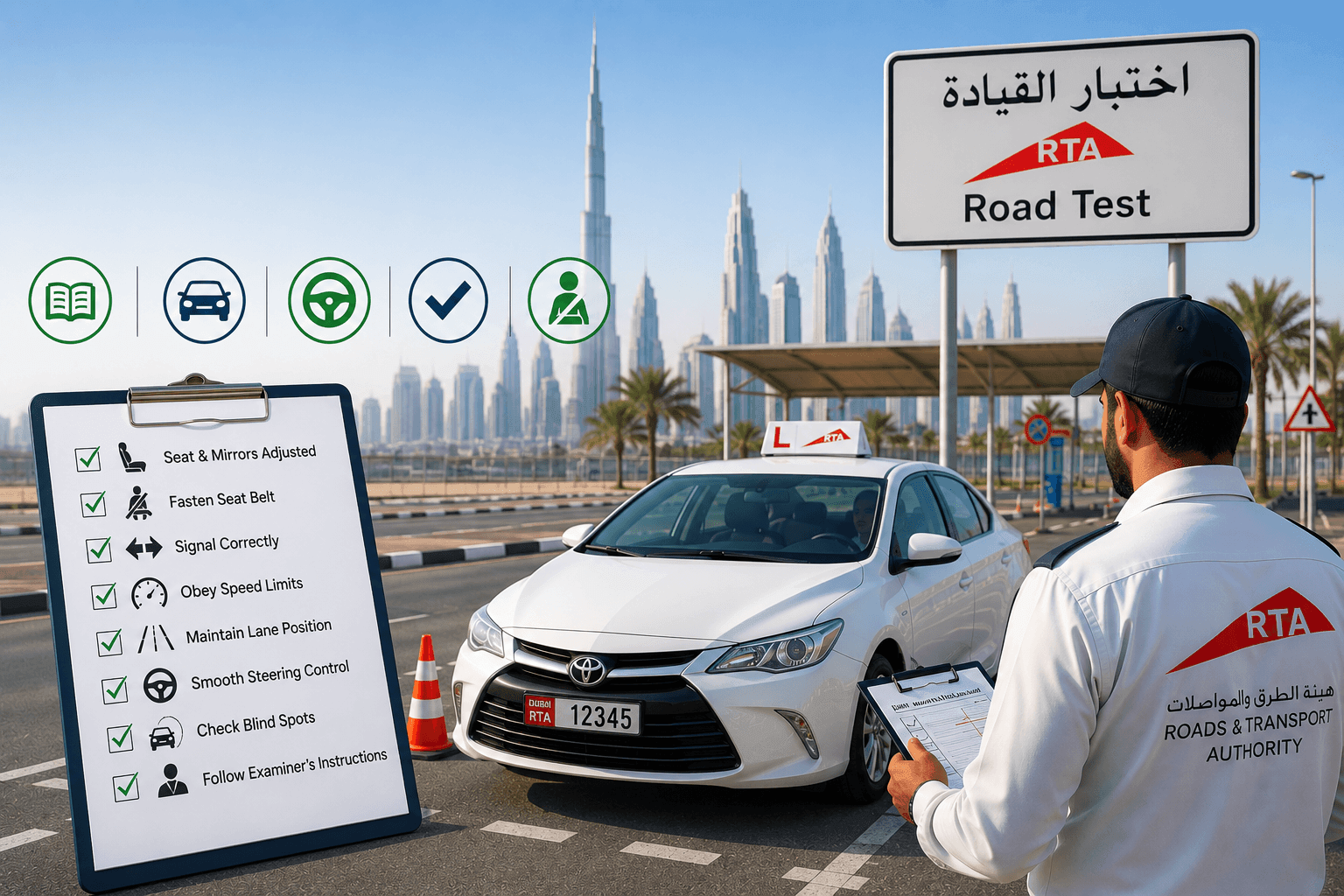
How To Pass RTA Road Test

Motorcycle tyre speed ratings are a critical specification that directly influences safety, performance, and regulatory compliance. While riders often focus on tyre size, tread pattern, and brand, the speed rating determines the maximum safe operating speed a tyre can sustain under specific test conditions. Selecting a tyre with an incorrect or misunderstood speed rating can compromise structural integrity, heat management, and high-speed stability.
Beyond simple labeling, speed ratings align with international homologation standards, including ECE certification in Europe and DOT approval in the United States. In addition, modern tyres are increasingly designed to integrate with motorcycle safety systems such as ABS interaction and traction control systems, making correct rating selection even more critical.
This guide explains how motorcycle tyre speed ratings work, how they are determined, and why they matter for daily riding, touring, and performance applications across different road conditions and riding styles.
A motorcycle tyre speed rating is an alphabetical code, also referred to as a speed symbol classification, that indicates the maximum speed capability of a tyre when operating under its specified load index and recommended inflation pressure.
This rating is assigned after controlled laboratory testing where tyres are subjected to increasing speeds under defined load and temperature conditions. The rating forms part of the tyre’s speed capability index, which engineers use to classify operational thresholds and speed load index correlation.
The speed rating does not suggest that a rider should travel at that maximum speed, but it confirms the tyre’s ability to withstand centrifugal force, internal heat buildup, structural stress, and shear stress at high rotational velocities.
These forces act continuously on the tread, belts, and sidewall, influencing the tyre’s tensile strength and resistance to expansion, as well as contact patch pressure distribution and dynamic tyre pressure variation.
The rating appears as a letter at the end of the tyre size marking. For example, in a tyre marked 180/55ZR17 (73W), the letter “W” represents the speed rating.
Speed ratings reflect engineering characteristics such as carcass construction, rubber compound composition, and tread stability. Advanced tyres may incorporate dual compound tyres and silica compound technology to improve both durability and grip across varying conditions.
Tyre speed ratings are determined through standardized laboratory testing under regulated conditions defined by international compliance bodies.
During testing, engineers also evaluate heat dissipation channels, tyre shoulder design, and tread blocks to ensure stability under sustained stress.
High-speed testing evaluates several performance parameters:
Manufacturers design higher-rated tyres with reinforced internal construction and compounds engineered for better thermal dispersion, often used in high-performance tyres.
These ratings also indirectly reflect the tyre’s ability to perform under different ambient road temperature conditions and sustained highway usage.
Sport motorcycles and performance-oriented bikes typically require V, W, or Y-rated tyres due to higher engine output and increased aerodynamic drag influence.
Touring and commuter motorcycles may use H or S-rated tyres depending on their design specifications, weight distribution, and typical urban riding conditions.
Speed ratings directly influence high-speed stability and handling consistency.
In real-world riding, factors such as suspension interaction, road surface irregularities, and tyre ageing also play a role in how a tyre behaves at speed.
Reduced tyre footprint dynamics and altered traction coefficient can affect braking stability, compromise cornering control, and reduce lean angle precision. This is particularly important when evaluating wet grip vs dry grip performance differences.
Heat management remains one of the most critical aspects of tyre engineering.
Modern compounds are designed to resist rubber degradation and maintain elasticity even under repeated heat cycles. However, excessive exposure to heat can accelerate tyre ageing and reduce performance over time.
Higher speed ratings typically indicate improved thermal resistance and compatibility with systems like tyre pressure monitoring system (TPMS), which helps maintain optimal operating conditions.
The speed rating must always be evaluated alongside the load index. The load index specifies the maximum weight the tyre can carry safely at a designated pressure.
Touring motorcycles frequently carry luggage and passengers, increasing stress on the carcass. This also affects contact patch pressure distribution and can influence overall tyre lifespan and tyre wear indicators.
Proper inflation pressure is also essential, especially in regions with high temperatures where ambient road temperature significantly impacts tyre performance.
Additionally, consider your riding style, whether aggressive, touring, or city commuting, as well as real-world exposure to wet grip vs dry grip scenarios.
Professional installation is recommended to ensure correct balancing, alignment, and integration with motorcycle safety systems.
During emergency braking, substantial weight transfers to the front tyre.
Modern motorcycles equipped with ABS interaction rely heavily on tyre grip consistency, making speed rating compliance critical for maintaining optimal braking distance.
During cornering, lateral forces increase exponentially with speed. Adequate speed ratings ensure carcass stability and support both longitudinal grip and lateral grip under dynamic conditions.
In many jurisdictions, tyre specifications must meet or exceed the original equipment rating to comply with safety regulations.
Using tyres that align with manufacturer-approved homologation standards demonstrates responsible vehicle maintenance and ensures compatibility with safety features such as traction control systems.
A common misconception suggests that higher speed ratings automatically deliver superior grip.
In reality, grip is also influenced by tyre compound technology, including dual compound tyres and silica compound usage, as well as tread design and intended application.
Tyres selected according to proper speed and load specifications maintain structural stability over time.
Monitoring tyre wear indicators, maintaining proper pressure, and understanding tyre lifespan are essential for long-term safety.
Environmental exposure, including heat and road conditions, contributes to rubber degradation, which can affect performance even if tread depth appears adequate.
Yes. A higher speed rating is generally acceptable if the size, load index, and rim compatibility match manufacturer specifications.
No. External factors such as load, temperature, and torque delivery stress may exceed the tyre’s structural limits even at moderate speeds./p>
Yes. Operating within rated limits reduces heat cycle fatigue and structural stress, supporting consistent wear and durability.
The speed rating appears on the sidewall as part of the tyre size marking, immediately following the load index number.
Not necessarily. Grip depends on compound design, tread pattern, and traction coefficient characteristics. The speed rating primarily indicates maximum safe operating capability.