٦ مايو ٢٠٢٦ م
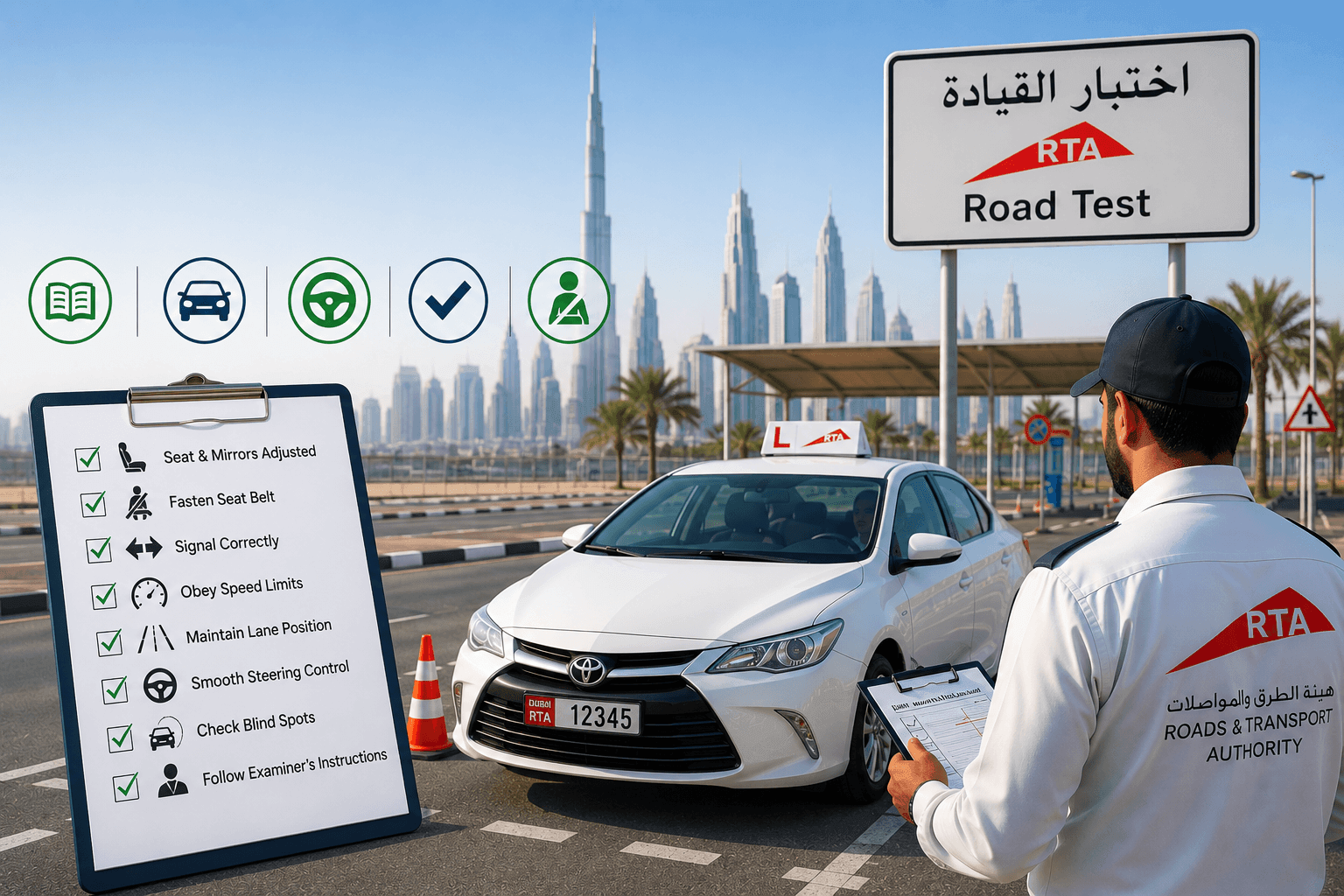
How To Pass RTA Road Test
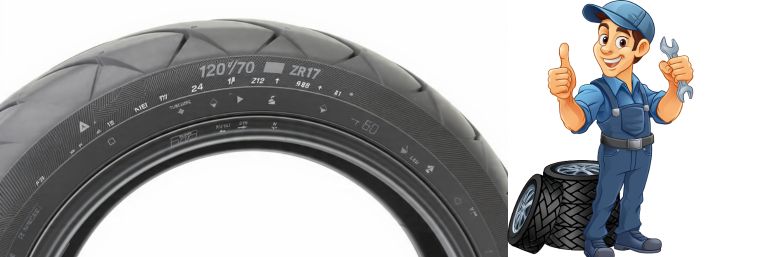
Ever looked at your motorcycle tyre and wondered what all those numbers, letters, and codes really mean?
They aren’t random.
They’re a technical specification blueprint covering load capacity, speed capability, tyre compound, carcass construction, inflation pressure limits, homologation approval, and more.
In reality, the markings represent a detailed tyre sidewall code that engineers use to define motorcycle tyre size, structural design, and compatibility with specific motorcycles.
And if you ride seriously, you need to understand it.
Let’s decode it properly.
Motorcycle tyre sidewall markings are not just numbers.
They represent:
They also provide critical information about rim compatibility, tubeless marking, rotation arrow orientation, and proper tyre inspection procedures.
Once you understand:
Tyre compound, ply rating, carcass construction, inflation pressure, homologation approval, sidewall stiffness, rolling resistance, and aquaplaning resistance — along with factors such as tread pattern, tyre wear indicator, and tyre service life
You stop riding blindly.
And start riding intelligently.
Your tyre is your only connection to the road surface.
That tiny contact patch handles:
It also manages complex forces including torque transfer, contact pressure distribution, and dynamic stability during aggressive riding or emergency braking.
The sidewall tells you:
It may also include information about motorcycle tyre standards, recommended rim compatibility, and indicators used for proper tyre pressure monitoring.
Ignore it?
You risk poor sidewall stiffness, excess sidewall flex, overheating, and even structural failure caused by excessive tyre deformation.
Example:
180/55 ZR17 73W
Let’s expand deeper.
But that’s just the surface.
Modern tyres also include:
They may also display additional identifiers such as tubeless marking, rotation arrow, and location of the tyre wear indicator.
Width affects:
It also influences contact pressure distribution and how the tyre’s tread block design interacts with the road surface.
Wider tyres increase grip but may alter speedometer calibration and steering geometry.
They may also influence load distribution across the tyre’s tread pattern.
Always match factory specs unless you understand geometry changes.
Lower aspect ratio:
Higher aspect ratio:
Aspect ratio also affects tyre deformation and resistance to centrifugal force during high-speed riding.
Radial:
Bias:
Radial tyres generally offer improved dynamic stability.
Load index = maximum supported weight.
But here’s what many riders miss:
It assumes correct cold tyre pressure.
Underinflation increases heat cycling, reducing overall tyre service life.
Speed symbol isn’t just about speed.
It reflects:
During high-speed riding tyres experience significant centrifugal force.
DOT = Manufacturing date.
Also check:
These certifications confirm compliance with global motorcycle tyre standards and validated rubber compound formulation.
Modern tyres may indicate:
The rubber compound formulation directly affects grip, durability, and heat resistance.
Directional tyres improve:
The rotation arrow ensures the tread pattern evacuates water correctly.
Proper mounting requires attention to:
The tyre must seat properly on the rim bead seat for airtight sealing and structural stability.
Motorcycle tyre sidewall numbers represent the tyre’s width (in millimeters), aspect ratio, construction type (radial or bias), rim diameter (in inches), load index, and speed rating. Additional markings may include maximum inflation pressure, DOT manufacturing date, E-mark certification, tyre compound type, and homologation code.
The load index is a numerical code indicating the maximum weight the tyre can safely carry. The speed rating is a letter indicating the maximum safe operating speed. This rating also reflects the tyre’s heat resistance, carcass construction strength, and temperature tolerance.
The DOT code identifies the manufacturing plant and production date. The last four digits indicate the week and year (e.g., 3224 is the 32nd week of 2024). Even unused tyres should be replaced after 5–6 years as rubber degrades over time.
TL (Tubeless) means the tyre is designed to hold air without an inner tube. TT (Tube Type) means the tyre requires an inner tube for inflation. Always match the tyre type to the rim compatibility.
Radial tyres (marked with “R”) have layers arranged perpendicular to the direction of travel, offering better heat dissipation. Bias-ply tyres use crisscross layers, providing stronger sidewall stiffness and load durability, preferred for cruisers.
The correct pressure is the recommended cold tyre pressure provided by the manufacturer in the manual or on the swingarm sticker. The maximum pressure on the sidewall is a structural limit, not the recommended riding pressure.
The E-mark certification indicates that the tyre complies with European safety and performance regulations regarding load capacity, speed performance, and construction quality.
Tyre compound refers to the rubber formulation. Softer compounds offer better grip but wear faster; harder compounds provide more mileage. Dual-compound tyres combine both for durability in the center and grip on the shoulders.
Using a lower speed rating can lead to excess heat buildup, reduced structural stability, and a higher risk of blowout. Always match or exceed the manufacturer’s specified speed rating.
Check the Tread Wear Indicator (TWI) marks. When tread depth reaches the wear bars (usually 1.6 mm), it must be replaced. Worn tyres compromise braking and wet-weather grip.