May 6, 2026
How To Pass RTA Road Test
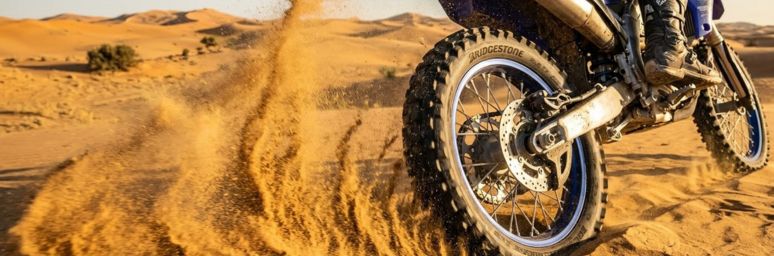
Riding a motorcycle in sand presents a distinct set of mechanical and handling challenges that differ significantly from asphalt, gravel, or hard-packed dirt. Sand is a dynamic surface that constantly shifts under load, reducing traction and demanding precise throttle control, balanced weight distribution, and—most importantly—the correct tyre selection. The wrong tyre can cause excessive wheel spin, poor steering response, instability under braking, increased rolling drag, unfavorable slip ratio, and rapid rider fatigue. The right tyre, however, transforms sand riding from a struggle into a controlled and confident experience with predictable off-road performance.
Motorcycle tyres designed for sand must prioritize flotation, forward drive, and lateral stability. Unlike road tyres that depend on surface adhesion and higher traction coefficient, sand tyres rely on paddle-like tread blocks, aggressive spacing, optimized tyre profile, and carcass flexibility to maintain momentum and directional control. Proper rim compatibility, correct aspect ratio, and suitable load index also influence how the tyre behaves under sandy load conditions.
This article explores how sand affects tyre performance, which design features matter most, and how specific models such as Pirelli 80/100 R12 50M Scorpion MX Soft 2023, Dunlop 110/90 R19 62M Geomax MX14 2023, Metzeler 90/90 R21 54M MCE 6 Days Extreme 2023, and Pirelli 90/90 B21 54R Scorpion Rally 2023 perform in sandy terrain. The focus remains on technical accuracy, real-world usability, and informed tyre selection for motocross, enduro, and rally-style sand riding.
| Tyre Details | Short Summary | Action |
|---|---|---|
| Pirelli Scorpion MX Soft 2023 Pirelli | 80/100 R12 50M | A sand- and soft-terrain motocross tyre with tall, widely spaced knobs for excellent self-cleaning and traction in extreme soft conditions. | Buy Now |
| Dunlop Geomax MX14 2023 Dunlop | 110/90 R19 62M | Scoop-style rear tyre built for sand and mud; features increased knob height and broader footprint for maximum forward drive. | Buy Now |
| Metzeler MCE 6 Days Extreme Metzeler | 90/90 R21 54M | Enduro-focused front tyre offering strong lateral support and mechanical resistance on dirt, sand, and mixed soft terrain. | Buy Now |
| Pirelli Scorpion Rally 2023 Pirelli | 90/90 B21 54R | Designed for long-distance rally and desert racing; balances flotation with directional stability and structural durability. | Buy Now |
Sand behaves differently from any other riding surface because it does not provide fixed resistance. When a motorcycle tyre applies torque, sand disperses rather than compresses firmly like soil or gravel. This dispersion increases rolling resistance and reduces forward momentum if the tyre lacks adequate tread penetration. From a physics perspective, increased shear force between tread blocks and loose particles determines whether propulsion is maintained or lost. As a result, riders must maintain consistent throttle input and smooth throttle modulation to prevent sinking or stalling. Tyres that cannot generate forward “bite” quickly lose traction, especially in deep sand dunes or loose desert environments.
Another major challenge is flotation. Narrow tyres with insufficient tread volume tend to dig downward instead of gliding across the surface. This affects tyre footprint expansion, limiting surface area contact. Excessive digging increases drag, worsens lateral slip, and destabilizes the motorcycle, particularly at lower speeds. Wider tyres with large, paddle-style knobs distribute load more effectively and improve surface glide. However, flotation must be balanced with directional stability, as overly soft carcasses may feel vague at higher speeds and reduce gyroscopic stability.
Steering precision in sand also requires careful tyre design. Front tyres must maintain predictable tracking while cutting through soft surfaces without washing out. Aggressive shoulder knobs and reinforced sidewalls help maintain lateral grip during cornering. Adequate sidewall flex allows terrain conformity, but excessive carcass deformation can introduce steering oscillation. Without adequate side support, the front end can collapse under load, especially when weight shifts forward during braking and aggressive counter-steering inputs.
Heat management is another factor often overlooked. Sand riding frequently involves sustained throttle input, increasing carcass flex and internal heat cycles. Repeated heat cycle exposure without proper compound engineering can accelerate thermal degradation. Tyres designed for soft terrain typically use advanced rubber compound formulation and specific ply rating configurations that manage heat buildup while maintaining flexibility. Selecting the correct tyre construction ensures consistent performance during extended desert or beach riding sessions, particularly in high ambient temperature and extreme desert climate conditions.
Sand-specific tyres use widely spaced, tall knobs to penetrate and displace loose terrain efficiently. The spacing allows sand to clear quickly rather than compact between tread blocks, improving self-cleaning tread efficiency. In motocross soft-sand tyres, rear tread blocks often resemble paddles, designed to scoop and propel the bike forward while generating strong sand roost during acceleration. This design maximizes drive traction, enhances torque delivery efficiency, and reduces wheel spin.
Front tyres<, by contrast, prioritize directional control and steering feedback. They feature sharp-edged central knobs to maintain straight-line tracking and reinforced shoulder blocks for cornering stability. The balance between penetration and flotation determines overall handling behavior and minimizes unpredictable weight transfer dynamics under braking.
Soft terrain tyres typically use more flexible rubber compounds. This flexibility allows the tread blocks to conform to shifting sand while improving mechanical grip. A flexible carcass also helps absorb uneven terrain beneath the sand layer, enhancing comfort and rider control while maintaining optimal radial construction or bias configuration based on intended use.
However, excessive softness can compromise stability at high speeds. Manufacturers engineer carcass stiffness and bead design to suit intended use, whether motocross sprint racing or long-distance rally stages. Proper inflation pressure further refines this balance, as slightly reduced pressure increases footprint size and improves flotation in deep sand while compensating for air pressure variation due to surface heat.
Although sand appears soft, buried rocks or compacted layers beneath the surface can cause sudden impacts. Reinforced sidewalls protect against punctures while maintaining lateral stability. This becomes especially important when transitioning between soft dunes and harder terrain where abrupt changes in surface temperature influence tyre response.
Structural reinforcement also minimizes knob tearing, a common issue in high-torque sand riding. Stronger block bases reduce flex fatigue and maintain tread integrity during aggressive acceleration and braking modulation.
The Pirelli 80/100 R12 50M Scorpion MX Soft 2023 is engineered specifically for soft terrain motocross applications. Its tread design features tall, widely spaced knobs that penetrate deep into sand and loose soil. The optimized aspect ratio and compact tyre profile improve responsiveness on lightweight bikes.
The tyre’s compound is optimized for flexibility, allowing the knobs to deform slightly under load for improved traction while resisting premature thermal degradation. This deformation increases the contact patch and enhances grip without excessive heat buildup. Riders benefit from improved steering feedback, predictable slip ratio, and stable acceleration across deep sand sections.
The Dunlop 110/90 R19 62M Geomax MX14 2023 is built specifically for sand and mud conditions. Its aggressive scoop-shaped tread blocks create strong forward propulsion, improving traction coefficient under heavy torque loads.
Advanced tread engineering improves sand evacuation while minimizing carcass deformation during sustained acceleration. The reinforced structure reduces block fatigue and improves long-term durability under repeated heat cycle exposure typical in competitive motocross.
The Metzeler 90/90 R21 54M MCE 6 Days Extreme 2023 balances steering precision and durability. Its construction enhances terrain adaptability, allowing effective transitions between sand, loose soil, and compact ground. Strong sidewall structure improves stability and reduces unwanted oscillation at higher speeds.
When used in desert racing, its predictable tracking and reinforced carcass contribute to superior off-road performance, particularly where terrain unpredictability demands controlled weight transfer dynamics.
The Pirelli 90/90 B21 54R Scorpion Rally 2023 features robust bias-belted construction suitable for high-speed desert conditions. Its optimized load index and speed rating ensure structural stability during prolonged high-speed travel across open dunes.
The tread layout promotes effective sand evacuation while preserving durability in extreme ambient temperature conditions. Compared to pure motocross tyres, it offers improved puncture resistance and structural longevity for extended rally stages.
Tyre selection should align with motorcycle type, riding intensity, terrain depth, and required rim compatibility. Riders must evaluate radial construction versus bias options, consider correct ply rating, and understand how tyre sizing influences flotation.
Inflation pressure adjustments influence performance significantly. Reduced pressure increases footprint size, improves flotation, and lowers rolling drag. However, improper settings can increase carcass deformation and bead stress.
Rider ergonomics and proper body positioning play critical roles. Maintaining rearward weight bias, applying smooth throttle modulation, and managing braking modulation prevent excessive digging and improve overall sand control.
Sand accelerates wear due to constant friction and high wheel spin. Repeated high-load operation increases the likelihood of knob tearing and compound fatigue. Regular inspection ensures structural integrity remains intact.
Fine sand particles can affect mechanical systems and contribute to performance decline. Monitoring tyre condition, air filtration, and drivetrain components helps maintain consistent off-road performance and prolong tyre lifespan.
Deep sand riding requires soft-terrain tyres with tall, widely spaced tread blocks. Rear tyres often feature paddle-style designs that maximize forward drive, while front tyres focus on directional stability and flotation.
Standard off-road tyres can function in light sand but may struggle in deep or loose conditions. Dedicated sand tyres provide better traction, improved flotation, and reduced wheel spin, especially in competitive or desert environments./p>
Slightly reducing tyre pressure increases the contact patch and improves flotation. However, riders must remain within manufacturer-recommended limits to avoid tyre damage or bead issues.
Rally tyres prioritize durability and high-speed stability, making them ideal for desert travel. Motocross sand tracks typically require more aggressive soft-terrain tyres for optimal acceleration and cornering grip.
Sand tyres can wear faster than hard-terrain tyres due to high wheel spin and friction. Regular inspection and proper maintenance help extend service life while maintaining consistent performance.