
May 6, 2026
How To Pass RTA Road Test
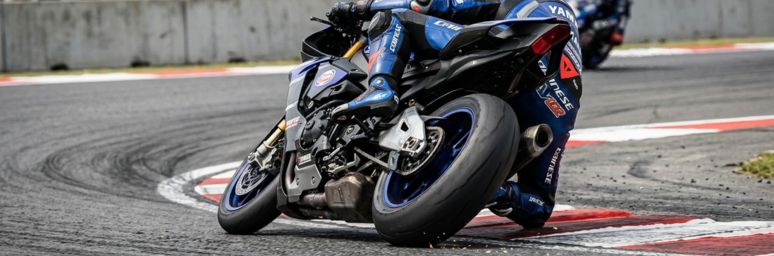
Selecting the correct front and rear tyre width is one of the most important performance decisions a motorcycle owner can make. Tyre width directly influences handling precision, braking stability, acceleration grip, fuel efficiency, and overall riding confidence. While many riders focus on aesthetics or assume that wider tyres automatically deliver better performance, tyre sizing is a carefully engineered aspect of motorcycle design. Manufacturers determine optimal tyre dimensions through extensive testing to balance chassis geometry, suspension calibration, weight distribution, and power delivery in accordance with strict OEM specification standards, while also accounting for real-world road conditions, urban vs highway riding scenarios, and high-speed stability requirements.
Tyre width works in conjunction with profile shape, aspect ratio, rim width, and tyre construction to create a specific contact patch behavior. Changing either the front or rear width alters how the motorcycle responds during cornering, straight-line riding, and emergency braking. These changes may be subtle or significant depending on the motorcycle category, riding style, and surface conditions, including wet grip performance, gravel traction behavior, and surface friction coefficient variations. A sport bike, commuter motorcycle, touring machine, and adventure motorcycle all require different tyre width characteristics to achieve their intended performance goals while maintaining correct wheel alignment geometry.
Understanding what works best for your motorcycle’s performance requires a detailed look at both front and rear tyre roles, engineering considerations, and real-world riding dynamics. This article provides a comprehensive analysis to help riders make informed decisions while maintaining safety, stability, and mechanical integrity, including considerations around aftermarket tyre selection and OEM vs aftermarket compatibility.
Tyre width refers to the measurement of the tyre’s cross-sectional width in millimeters. For example, in a 120/70 ZR17 tyre, 120 represents the tyre width. However, width alone does not determine performance. The tyre’s aspect ratio, profile curvature, and construction type also shape how the tyre behaves under load, including how the tyre profile radius influences lean characteristics and sidewall flex characteristics.
Motorcycle tyres are designed to generate grip through a combination of rubber compound, tread pattern, carcass construction, and heat management. The width influences the size and shape of the contact patch, which is the portion of the tyre touching the road surface. A wider tyre generally produces a broader contact area during upright riding, while a narrower tyre may create a more elongated contact patch. However, the way that contact area changes during lean is described as tyre footprint evolution, and it significantly affects stability, including contact patch temperature distribution and dynamic traction coefficient behavior.
Motorcycle dynamics differ from cars because motorcycles rely on lean angle and balance rather than lateral steering alone. Tyre width affects lean angle progression, steering effort, and stability under dynamic load transfer. The relationship between width and slip angle, as well as the generation of camber thrust, plays a critical role in cornering grip, especially under tyre deformation under lateral load conditions. The front and rear tyres serve different mechanical purposes, so their ideal widths vary accordingly.
The front tyre plays a critical role in steering accuracy and rider feedback. It controls directional stability, braking input, and initial corner entry. A properly sized front tyre provides predictable steering response, balanced countersteering effort, and stable lean transitions while maintaining lateral stability during rapid directional changes.
A narrower front tyre generally allows quicker turn-in response and lighter steering input. This is why many sport motorcycles use relatively moderate front widths such as 110 mm or 120 mm. A narrower profile maintains agility and improves feedback through the handlebars. The rider can feel subtle grip variations during braking and cornering, which enhances confidence at higher speeds and improves braking torque modulation, especially when managing unsprung mass distribution.
Increasing front tyre width beyond manufacturer recommendations can create heavier steering feel. A wider tyre increases rotational mass and gyroscopic resistance, making the motorcycle less responsive during quick direction changes. It may also influence the centre of gravity shift, slightly altering steering geometry and reducing agility in tight cornering environments while increasing rolling circumference variation.
During braking, weight transfers forward, placing significant stress on the front tyre. The tyre must maintain structural integrity while generating sufficient friction. A wider tyre does not automatically improve braking performance. Grip depends more on compound quality, carcass stiffness, and temperature management than width alone, including tyre heat cycle degradation effects over time.
An excessively wide front tyre may alter the contact patch shape during braking, reducing the precision of feedback. It may also affect the suspension’s ability to manage compression under heavy braking loads. Proper suspension sag, preload adjustment, and compression damping must align with tyre dimensions to maintain consistent braking stability. Maintaining the correct width ensures that braking torque transfer remains balanced and predictable while preserving ABS functionality and correct ABS calibration, especially under high-temperature operating conditions.
The rear tyre is primarily responsible for transferring engine power to the road surface. Under acceleration, weight shifts rearward, increasing the load on the rear contact patch. A wider rear tyre can improve traction in high-torque motorcycles by providing a broader contact area during upright acceleration and improving torque transfer efficiency, including mechanical torque vectoring effect through tyre grip distribution.
Sport motorcycles often use wider rear tyres such as 160 mm, 180 mm, or even 190 mm depending on engine displacement and power output. This width supports stability during aggressive throttle input and enhances straight-line performance. However, increasing rear tyre width beyond recommended specifications can create unintended consequences.
A wider rear tyre increases rolling resistance and rotational mass. This may slightly reduce acceleration efficiency and fuel economy, while also impacting drivetrain efficiency. Additionally, excessive width can influence longitudinal stability, particularly when accelerating over uneven surfaces or under variable traction conditions.
When leaning into a turn, the rear tyre profile plays a crucial role in maintaining stability. Wider tyres typically have a flatter profile, which can improve upright grip but may require more steering effort during lean initiation. A tyre with a well-designed curved profile allows smooth transitions from upright to full lean without abrupt feedback changes and minimizes excessive tyre deformation under load while maintaining optimal load sensitivity characteristics.
If the rear tyre is excessively wide relative to the front, the motorcycle may develop imbalanced handling characteristics. The front may feel overly responsive while the rear resists lean progression. Proper front-to-rear width ratio ensures predictable handling and smooth corner exit acceleration while preserving optimal rolling circumference alignment for accurate speedometer readings and electronic sensor calibration accuracy.
Motorcycle manufacturers carefully determine the optimal width combination for each model. This balance ensures that steering geometry, rake and trail, wheelbase, and suspension dynamics function as intended. These calculations also account for electronic rider systems, including electronic rider aids such as traction control and ABS, along with advanced ECU-based traction algorithms.
Changing only one tyre width can disrupt this equilibrium. For example, increasing rear width without adjusting the front may shift the handling bias toward understeer. Conversely, increasing front width disproportionately may create slower steering response. Balanced tyre width maintains consistent lean angle behavior, stable weight transfer, predictable braking response, and accurate traction control calibration.
Riders considering width modifications must also evaluate rim width compatibility. Tyres are designed to operate within specific rim compatibility range parameters. Improper bead seating due to incorrect rim pairing can distort sidewall shape and negatively affect contact patch pressure distribution and tyre bead locking mechanism integrity.
Sport motorcycles prioritize cornering precision, lean angle stability, and high-speed performance. These machines typically use wider rear tyres to handle engine output while maintaining moderate front widths for agile steering. Proper management of heat cycle behavior and compound durability is critical, especially under track-focused riding conditions.
Touring motorcycles prioritize comfort, load capacity, and long-distance stability. Tyre width choices focus on durability, consistent wear patterns, and strong hydroplaning resistance for wet-road stability, including improved aquaplaning resistance threshold performance. Many touring tyres incorporate advanced silica compound blend technology to improve wet grip without increasing width.
Commuter motorcycles are engineered for efficiency and maneuverability in traffic. Narrower tyre widths reduce rolling resistance and improve fuel economy. Tyre squaring over time, also known as tyre squaring, should be monitored through regular tread wear pattern analysis and tyre wear lifecycle tracking.
Adventure motorcycles require versatility across pavement and off-road terrain. Tyre width must balance road grip and off-road traction. Excessive width may reduce performance on loose surfaces where narrower tyres can cut through dirt or gravel more effectively while preserving lateral stability and off-road surface penetration capability.
Motorcycles are homologated with specific tyre sizes approved for road use. Installing non-approved widths may violate transportation regulations in certain regions. Insurance providers may also question claims if tyre modifications deviate from manufacturer specifications, especially when using aftermarket tyre configurations.
From a safety perspective, maintaining correct clearance within the swingarm, fender, and chain alignment area is critical. Wider tyres may interfere with suspension travel or cause rubbing under load conditions. Ensuring correct rebound damping settings after tyre changes can further protect chassis balance and maintain consistent dynamic stability under varying loads.
Professional consultation is recommended before making any dimensional changes. Certified technicians can assess compatibility, clearance, suspension calibration, and electronic system integrity to maintain safe operation, including proper tyre mounting, balancing, and alignment procedures.
The optimal tyre width depends on the motorcycle’s design, intended usage, and rider expectations. In most cases, adhering to manufacturer-recommended front and rear widths provides the best balance of performance, safety, and durability. These dimensions are the result of extensive engineering analysis and real-world testing aligned with OEM specifications and performance tuning benchmarks.
Performance improvements are more effectively achieved by upgrading tyre quality rather than increasing width. Premium tyres with advanced compounds, improved carcass engineering, optimized tread patterns, and refined mechanical grip vs chemical grip balance can significantly enhance grip and stability within factory dimensions, especially when selecting high-performance aftermarket tyres with OEM compatibility.
Riders seeking improved handling should consider suspension tuning, correct tyre pressure maintenance, and proper alignment checks before altering tyre width. These adjustments often deliver noticeable performance gains without compromising engineered balance, while also improving long-term tyre durability and operational safety.
No. A wider rear tyre may improve straight-line traction on high-power motorcycles, but it can increase rolling resistance, reduce agility, and affect fuel efficiency.
Not necessarily. Braking performance depends more on compound quality, tyre construction, and proper inflation than width alone./p>
Changing only one tyre width can disrupt the engineered balance between front and rear handling characteristics. It is important to maintain proper proportion and compatibility.
Wider tyres increase rolling resistance and rotational mass, which may slightly reduce fuel efficiency compared to narrower OEM sizes.
Upgrading to premium tyres with advanced rubber compounds and optimized tread design within manufacturer-recommended sizes is the safest and most effective approach.