
May 6, 2026
How To Pass RTA Road Test
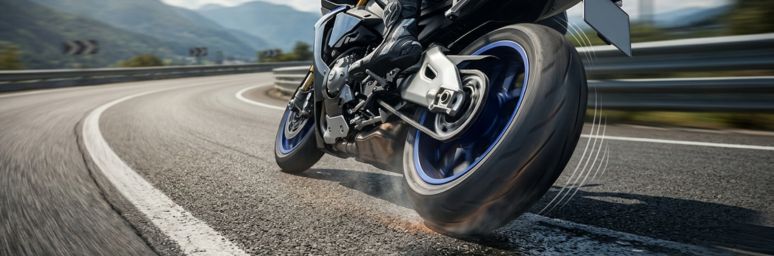
Motorcycle stability depends on a precise interaction between tyre design, road surface, suspension geometry, and rider input. Within the broader framework of vehicle dynamics, tyres function as the primary interface between the machine and the road. While engine performance and braking systems receive significant attention, tyre selection remains one of the most critical yet misunderstood factors influencing overall bike balance.
Choosing the wrong tyre—whether in terms of size, compound, construction type, or intended usage—can compromise grip, cornering confidence, braking efficiency, and high-speed control. Instability often begins at the tyre-road interface, where friction coefficient, road surface adhesion, and mechanical grip determine real-world performance. In addition, tyre compatibility with OEM specifications and overall tyre performance balance play a crucial role in ensuring predictable handling.
This article explains How Wrong Tyre Choice Affects Bike Stability, examining mechanical principles, heat behavior, traction dynamics, and real-world riding implications across varying riding conditions and road conditions variability.
Motorcycle stability refers to the machine’s ability to maintain directional control under acceleration, braking, cornering, and varying road conditions. Stability is influenced by both mechanical design and gyroscopic stability generated by rotating wheels. Unlike four-wheeled vehicles, motorcycles rely on two narrow contact patches for balance, making weight distribution balance and wheelbase balance essential factors.
Each tyre creates a small but critical footprint on the road surface, transmitting steering input, braking force, and acceleration torque while responding to cornering forces and braking torque transfer. This footprint is further influenced by tyre footprint pressure distribution and sidewall flex dynamics, which directly affect grip consistency.
In addition, unsprung mass, dynamic load transfer, and wheel alignment directly influence how forces are transmitted through the chassis. When a tyre is mismatched to the motorcycle’s design or riding conditions, these elements become imbalanced. Even small deviations in tyre specifications can disrupt predictable behavior, reducing rider safety margin and increasing instability.
Tyre width directly affects the contact patch and lean dynamics. Installing a tyre that is wider than manufacturer recommendations may seem beneficial for grip, but it often distorts the tyre profile and compromises contact patch optimization. It also affects rolling inertia and tyre deformation characteristics, altering how the motorcycle responds dynamically.
It may also lead to rim compatibility issues and improper tyre bead seating, which further impacts safety.
Conversely, a tyre that is too narrow reduces surface contact, limiting mechanical grip and compromising braking grip and cornering stability.
The aspect ratio determines the tyre’s sidewall height relative to width. A lower-than-recommended profile reduces shock absorption and alters ride height. Even minor changes can affect:
Additionally, incorrect profiles affect braking force distribution and overall traction coefficient variation, reducing predictability during aggressive riding.
Rubber compound composition plays a central role in traction and thermal performance. The underlying tread compound chemistry determines elasticity, compound hysteresis, and overall friction behavior. Modern tyres also incorporate silica-based compounds and multi-compound tyre technology to enhance grip across conditions.
Tyres are engineered for specific rubber compound temperature window, and deviating from this range reduces effectiveness.
It also reduces aquaplaning resistance in wet environments due to reduced flexibility.
This directly impacts tyre lifespan and long-term stability while reducing tyre heat dissipation efficiency.
Tyres generate heat through friction and deformation. Heat cycles influence rubber elasticity and internal pressure. Improper selection can disrupt thermal equilibrium, leading to instability.
Frequent heating and cooling cycles degrade compound performance, leading to reduced elasticity and decline in tread block rigidity.
Incorrect pressure also affects tyre balancing efficiency and increases uneven wear.
Advanced tread designs improve water evacuation efficiency and aquaplaning resistance, especially critical during monsoon riding conditions.
Mixing constructions improperly can affect tyre compatibility, leading to instability and inconsistent feedback.
Choosing below recommended specifications reduces safety margins and increases instability.
An incorrect tyre disrupts braking efficiency and affects systems like ABS (Anti-lock Braking System) and TCS (Traction Control System).
Monitoring tyre wear indicators and following proper tyre maintenance practices is essential for sustained stability.
These reflect poor performance optimization and reduced safety.
Yes. Improper specifications may increase high-speed wobble and reduce aerodynamic stability.
Yes. Tread compound chemistry influences grip, heat resistance, and wear behavior./p>
The friction coefficient determines how effectively the tyre converts load into usable traction.
During the tyre warm-up phase, compounds reach their designed elasticity range, improving grip.
Excessive load sensitivity reduces predictable traction under acceleration and braking.