May 6, 2026
How To Pass RTA Road Test
I want to replace all my run-flat tyres with standard tyres, is it possible?
We get this question a lot!
Especially from car owners who find run-flat tyres very inconvenient while driving.
So, the question remains, "is it okay to remove all four at once and replace them with standard tyres?"
Let's find out the difference between run flat and standard tyres and whether you should replace all your RunFLat with standard tyres.
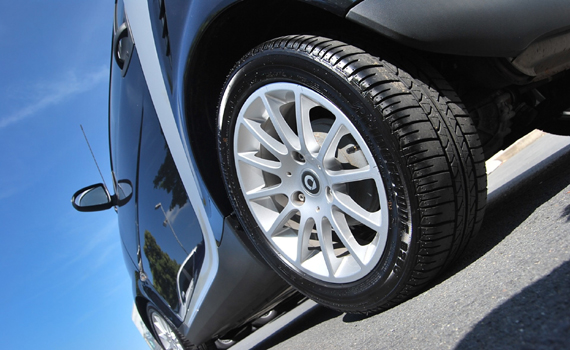
Run-flat (RFT) tyre that has an air bladder inside it and maintains its pressure regardless of whether the car is moving or is at a stop.
This means during a puncture; you can continue driving. However, it doesn't mean you can drive them indefinitely. In case you need to change the tyre, you will be able to drive to a repair shop nearby.
There are different specifications for each tyre, and you can get them from manufacturers. Manufacturers confirm how fast and far you can continue riding your vehicle in such a puncture situation.
For instance, few run-flat tyres allow continuous driving up to 50 miles (80 km) with a max speed of 50 mph (75 km/h) even after the pressure loss.
| Advantages Of Run-Flat Tyres | Disadvantages Of Run-Flat Tyres |
|---|---|
| It allows continuing driving on a flat tyre: They offer a significant advantage as they permit drivers to drive even with punctured tyres. Even when a tyre is punctured, with these tyres, you can ride up to a few miles without stopping. | Reduced Tread Life: It's recommended that vehicle owners with run-flat tyres need to replace their tyres 8,000 to 10,000 km earlier than their standard tyres. The manufacturer uses soft treads to reduce the weight of the tyres. As a result, the treads on these tyres wear out earlier than those on standard tyres. |
| It Provides Better Stability: Run-flat tyres provide better stability than standard tyres in a situation like tyre punctures since the car loses its grip on the road. | High Cost: The cost of run-flat tyres is generally 50% higher than that of standard tyres. |
| Save Space, Less Weight: The run-flat tyres make you forget about any spare wheels or tyres. The car gets lighter if spare tyres and repair tools get excluded. Furthermore, more rear space can get used for additional seats or storage, depending on what you need. | Tyre Pressure Monitoring System: Run-flat tyres are constructed differently, so vehicle owners must equip their vehicles with Tyre-Pressure Monitoring Systems (TPMS). With RFT, it's not always easy with RFT to manually gauge low tyre air pressure. Thus, a TPMS system plays a critical role in safety. |
The most common tyre type is the standard. Standard tyres do not allow driving when flat or punctured, which is the main difference between run-flat tyres. Also, standard tyres do not have sidewalls that maintain air pressure if punctures occur.
| Advantages Of Standard Tyres | Disadvantages Of Standard Tyres |
|---|---|
| Better Braking And Grip: As a result of their more giant rims and tyres, they provide better braking. As a result, they provide good grip, and side swaying is also less noticeable. | A stiffer, bumpier ride: When you run standard tyres, your suspension system is left to absorb the shock of bumps on the road since there is more space between your vehicle and the road. The easiest way to avoid severe damage and ride in a loud, bumpy manner is to ensure your suspension system accommodates standard tyres. |
| Improves Road Feel: This tyre improves a car's road feel and enhances its cornering characteristics, as it can handle more cornering forces and steering accuracy. | Rapid Deflation: Also, in the event of a puncture, conventional tyres will deflate much faster than those with run-flat tyres. This means you cannot drive on the conventional flat tyre. You will need to replace it before your car can move. |
Another disadvantage is that it's much harder to protect your wheels and rims from the road when using standard tyres. This is because they have less cushioning. The damage can range from bent rims to punctured tyres and even more severe wheel problems.
The short answer is yes, you can.
However, change the tyres from RFT to conventional tyre if you want to change them all! This will help ensure uniformity and avoid dangerous risks. Moreover, it's best to choose standard tyres according to manufacturer recommendations.
You should consider the following points before switching from run-flats to regular tyres:
In conclusion, we can say that having a run-flat tyre for your vehicle is more profitable than standard tyres. Even though run flats are somewhat expensive, it is worth more than standard tyres with no emergency support.
Searching for premium tyres in Abu Dhabi? Well, the search stops here! TyresCart is a leading online tyre shop in Abu Dhabi. We have the best tyres collections for all your needs, whether run-flat tyres or standard tyres. Take a look at TyresCart run-flat tyre collection to get the best tyres for your vehicles. In case of any queries, please contact us.
Yes, you can replace all four run-flat tyres with standard tyres. However, it is important to replace all four at the same time to maintain consistent handling, safety, and performance. Mixing run-flat and standard tyres is not recommended.
Run-flat tyres allow you to continue driving for a limited distance even after a puncture, while standard tyres lose air quickly and require immediate repair or replacement. Run-flat tyres have reinforced sidewalls, whereas standard tyres rely on air pressure for structural support.
Yes, standard tyres generally provide a smoother and more comfortable ride. Run-flat tyres tend to be stiffer due to reinforced sidewalls, which can result in a harsher ride, especially on uneven or rough roads.
Before switching, consider that you will need a spare tyre, jack, and necessary tools since standard tyres cannot be driven when flat. Also, ensure that the new tyres match the manufacturer's specifications for size, load rating, and speed rating.
run-flat tyres are more expensive but offer added safety and convenience by allowing you to drive for a limited distance after a puncture. If safety and convenience are your priorities, they can be worth the investment.