May 6, 2026
How To Pass RTA Road Test
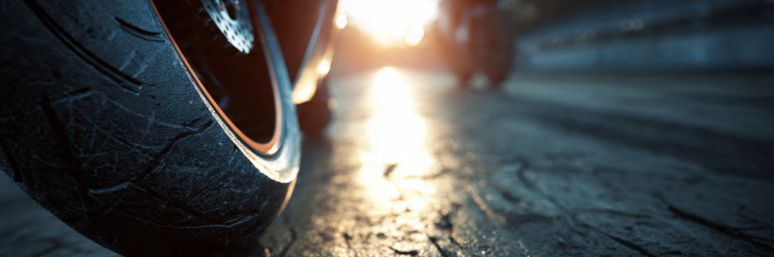
If you ride a motorcycle, your tyres aren’t just rubber — they’re a highly engineered safety system made of tread compound chemistry, reinforced tyre carcass layers, and precision-built radial tyres or bias-ply tyres.
Your entire ride depends on a palm-sized contact patch dynamic between rubber and asphalt.
So the real question isn’t just how long do motorcycle tyre last — it’s:
How long do they last under your riding conditions, load index, speed rating, and heat cycles?
Let’s break it down properly.
Most motorcycle tyres last between:
3,000 and 20,000 miles
But mileage depends heavily on:
A sportbike ridden aggressively at high lean angles will destroy its rear tyre faster than a touring bike cruising at moderate speeds.
Why?
Because soft compounds degrade faster under repeated heat cycles.
Let’s go deeper than “riding style.”
Every ride generates internal heat.
Over time, repeated heat cycles harden the compound and reduce grip.
Even if tread looks fine, performance drops.
That’s compound degradation.
Your tyre tread pattern affects:
Highway riders see excessive center wear.
Aggressive riders experience heavy shoulder wear.
Incorrect PSI levels accelerate:
Some riders use nitrogen inflation to stabilize pressure across ambient temperature changes.
Your tyre has:
Exceed either regularly — lifespan drops significantly.
Carrying heavy luggage? Riding two-up?
You’re increasing structural stress on the tyre carcass.
Tyre life isn’t just rubber.
It’s also:
Even minor air leakage can slowly destroy tyre longevity.
Here’s something many riders miss:
Tyres degrade chemically.
Even parked tyres suffer from:
Most manufacturers recommend replacement after 5–6 years, regardless of tread depth.
Repeated heat cycles and environmental exposure break down internal integrity.
Beyond flat spots, watch for:
Ignoring these can increase tyre blowout risk.
And a blowout on a motorcycle?
That’s not something you want to experience.
Your riding temperature range matters.
Hot climates:
Cold climates:
Add road camber variations, rough asphalt, and off-road terrain — and lifespan changes dramatically.
If you want maximum safe mileage:
Think of tyres like performance athletes.
Treat them right — they perform longer.
Here’s the refined answer:
But true lifespan depends on:
Tyres don’t just wear — they evolve.
Grip changes. Heat response changes. Stability shifts.
And your safety shifts with it.
Yes. Repeated heat cycles—the process of a tyre heating up during use and cooling down afterward—gradually harden the rubber compound. Over time, this chemical change reduces overall grip and flexibility even before the tread physically wears out.
The ideal PSI depends entirely on your motorcycle manufacturer's recommendation. Always maintain the specified PSI (Pounds per Square Inch) to ensure optimal handling and prevent uneven wear; riding with even a few pounds of under-inflation can significantly increase tyre temperature and decrease life.
Generally, yes. Radial tyres tend to last longer, especially for highway riding, because they manage heat more efficiently than bias-ply tyres. Lower internal friction allows the tread to stay cooler, which slows down the rate of rubber degradation over long distances.
Cupping or scalloping is usually caused by improper tyre balancing, worn suspension components, or riding with incorrect tyre pressure. These factors cause the tyre to "bounce" slightly or track unevenly, leading to wavy wear patterns across the tread surface.
They are equally critical. Even if a tyre has plenty of tread left, age-related degradation—such as storage oxidation and compound hardening—typically makes replacement necessary after 5–6 years to ensure the rubber remains soft enough to provide safe levels of grip.