May 6, 2026
How To Pass RTA Road Test
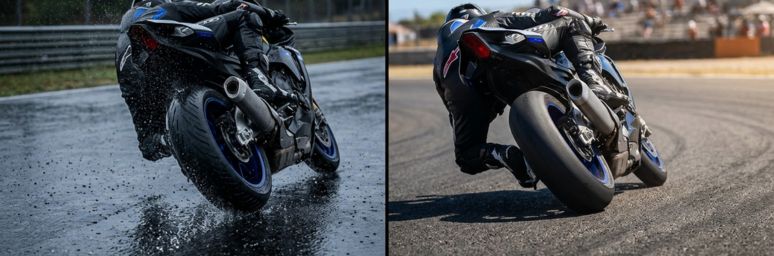
Motorcycle tyres are the primary point of contact between the rider and the road. Every acceleration input, braking maneuver, and cornering movement depends on how effectively the tyre converts engine power and rider control into usable traction. Among the most critical performance distinctions in motorcycle tyres is the balance between wet grip and dry grip. Understanding how these two characteristics differ—and how they are engineered—helps riders make informed decisions based on climate, riding style, and safety priorities, including real-world riding scenarios such as urban commuting, highway touring, and monsoon riding conditions.
Wet and dry grip are not interchangeable properties. They are influenced by tyre compound formulation, tread design, heat generation, contact patch behavior, operating temperature, and structural design elements such as radial construction, bias-ply construction, and sidewall stiffness. Selecting the appropriate rubber compound requires evaluating riding conditions, environmental exposure, long-term durability expectations, and the tyre’s overall performance envelope, including all-season tyre performance and road surface temperature variance.
This article provides a structured explanation of wet grip versus dry grip, examining compound behavior, traction mechanics, tyre pressure influence, coefficient of friction, and thermal performance to help riders understand the technical and practical implications of their tyre choice, along with braking distance optimization and dynamic grip response.
Grip refers to the frictional force that allows a motorcycle tyre to maintain traction against the road surface. It is the result of mechanical interaction between rubber and pavement, supported by chemical adhesion at the microscopic level and influenced by the measurable coefficient of friction between rubber and asphalt, as well as rubber hysteresis, which defines energy loss during deformation.
Two key traction mechanisms influence grip:
The balance between these forces determines how well a tyre performs under dry and wet conditions.
Dry grip typically relies more on compound stiffness, surface contact efficiency, and effective lateral grip during cornering. Wet grip requires advanced compound flexibility, high aquaplaning resistance, optimized groove ratio, groove density ratio, and water evacuation capability to prevent hydroplaning and traction loss.
Dry grip refers to traction levels achieved on clean, dry pavement where friction is naturally higher. In these conditions, tyre performance depends largely on compound stability, optimal operating temperature, contact patch integrity, and structural characteristics such as belt package reinforcement and dynamic load distribution.
Dry-performance tyres often use rubber formulations with higher carbon black content and may incorporate dual-compound construction or multi-compound technology. These designs typically feature a firmer centre compound for durability and a softer shoulder compound for improved lean-angle traction, along with shoulder wear indicators for performance monitoring.
Additionally, the compound curing process ensures consistent elasticity and durability across varying riding conditions.
In dry conditions, heat generation occurs rapidly due to increased friction and sustained contact pressure. Aggressive throttle application, hard braking, and rapid direction changes elevate tyre temperature further.
High-performance tyres are engineered to operate within a defined thermal window. Operating outside this range increases the risk of heat stress fatigue, compound breakdown, and accelerated shoulder wear pattern development, along with increased rolling resistance under extreme conditions.
Managing tyre pressure, maintaining correct load index, and monitoring riding intensity help maintain thermal balance and structural integrity.
Dry grip becomes especially critical during high lean angles. As the motorcycle tilts, the contact patch shifts toward the shoulder area of the tyre. The presence of a softer shoulder compound enhances transition zone grip, ensuring smooth traction from upright to full lean.
Road factors such as road camber, paint markings, and thermoplastic lines may alter surface friction locally. Tyres engineered for dry grip aim to maintain consistent lateral stability across these variations, including uneven surfaces and road safety variability factors.
Predictable feedback through handlebars, stable dynamic load transfer, and controlled interaction with traction control systems are indicators of effective dry grip performance.
Wet grip refers to a tyre’s ability to maintain traction when water reduces direct rubber-to-road contact. Water acts as a lubricating layer, reducing the effective coefficient of friction and increasing braking distances if not properly managed.
Wet-performance tyres feature deeper grooves, optimized void area, and directional tread patterns to enhance aquaplaning resistance. Proper tread depth ensures efficient water dispersion and maintains contact patch effectiveness, supported by advanced groove engineering.
Effective water evacuation reduces the risk of hydroplaning and preserves braking stability during heavy rainfall.
Wet grip is strongly influenced by compound flexibility at lower temperatures. Silica-rich formulations improve adhesion on damp surfaces and resist rubber hardening caused by oxidation or environmental aging.
This compound design ensures elasticity even when the surface temperature differential between road and tyre is significant, supported by enhanced compound chemistry balance.
Wet surfaces reduce heat generation because friction levels are lower. As a result, tyres may struggle to reach optimal operating temperature. Wet-oriented compounds compensate by maintaining flexibility within a broader thermal range.
Performance metrics such as wet grip rating under EU tyre labeling systems and BIS certification standards in India provide standardized comparisons of braking distance benchmarks under controlled wet braking tests.
| Factor | Dry Grip Focus | Wet Grip Focus |
|---|---|---|
| Compound | Higher stiffness and specialized heat tolerance. | Increased flexibility with silica-enhanced materials. |
| Tread Pattern | Fewer grooves with a larger contact area. | Deep channels and directional water evacuation. |
| Operating Temp | Requires a higher optimal range to perform. | Effective and safe at lower temperatures. |
| Heat Management | Engineered for rapid heat buildup tolerance. | Focuses on moderate heat generation levels. |
| Durability | Faster wear under aggressive driving conditions. | Balanced longevity across varied climates. |
Road friction varies due to surface contamination, oil residue, dust accumulation, and surface composition, especially in urban traffic environments and high-density road networks.
Dry asphalt provides strong mechanical interlocking. Wet roads reduce mechanical interaction and require superior adhesive properties. Painted lines and metal surfaces may further reduce grip under wet conditions.
The contact patch remains central to traction. Correct inflation maintains optimal footprint geometry and prevents excessive tread block movement, which can reduce stability.
Tyre pressure significantly affects both wet and dry performance. As temperature increases, internal air pressure rises due to thermal expansion.
Maintaining manufacturer-specified pressure ensures compliance with speed rating and load capacity parameters and improves overall tyre safety performance.
Climate influences compound curing stability, oxidation rate, and UV degradation exposure. Prolonged sun exposure accelerates UV degradation, contributing to compound aging.
Urban riding produces repeated thermal spikes, increasing cumulative heat cycles. Highway riding generates sustained heat.
In regions with heavy rainfall, riders must prioritize high wet grip rating tyres, while dry regions benefit from heat-resistant performance compounds.
Each heat cycle alters molecular elasticity. Over time, oxidation and environmental exposure contribute to compound stiffening.
Repeated heating accelerates internal structural fatigue and may reduce peak grip levels even when tread depth appears acceptable, also impacting long-term compound resilience.
Monitoring both tread depth and compound aging ensures performance reliability.
Braking shifts load forward, increasing contact pressure and heat generation. In dry conditions, strong longitudinal grip supports effective deceleration.
In wet conditions, braking relies on water evacuation efficiency and compound adhesion. Modern ABS modulation and brake force distribution systems depend on predictable grip behavior and integration with rider safety systems.
Tyres with strong wet performance ratings improve stability under emergency braking scenarios.
Balancing grip expectations with structural durability ensures cost-effective long-term ownership and improved performance consistency across tyre categories.
Riders should also consider motorcycle compatibility, tyre fitment specifications, and intended usage category such as sport, touring, or commuter.
Riders in predominantly dry climates may prioritize lateral stability and heat tolerance. Riders in humid climates benefit from higher wet grip ratings and silica-rich compounds.
Understanding tyre labeling standards, including wet grip and rolling resistance rating classifications, along with global tyre certification systems, assists in objective comparison.
Dry grip focuses on high-temperature stability and cornering precision, while wet grip emphasizes compound flexibility and water evacuation to maintain traction on damp surfaces.
Dry-focused tyres can perform adequately in light rain but may not provide optimal traction during heavy rainfall due to reduced water evacuation and compound stiffness./p>
Correct tyre pressure maintains proper contact patch shape. Overinflation reduces grip, while underinflation increases heat buildup and uneven wear.
Yes. Wet conditions reduce heat generation. Tyres with silica-enhanced compounds maintain flexibility at lower temperatures, improving traction.
Sport-touring tyres are engineered to balance wet and dry performance, making them suitable for riders who encounter mixed weather conditions throughout the year.