May 6, 2026
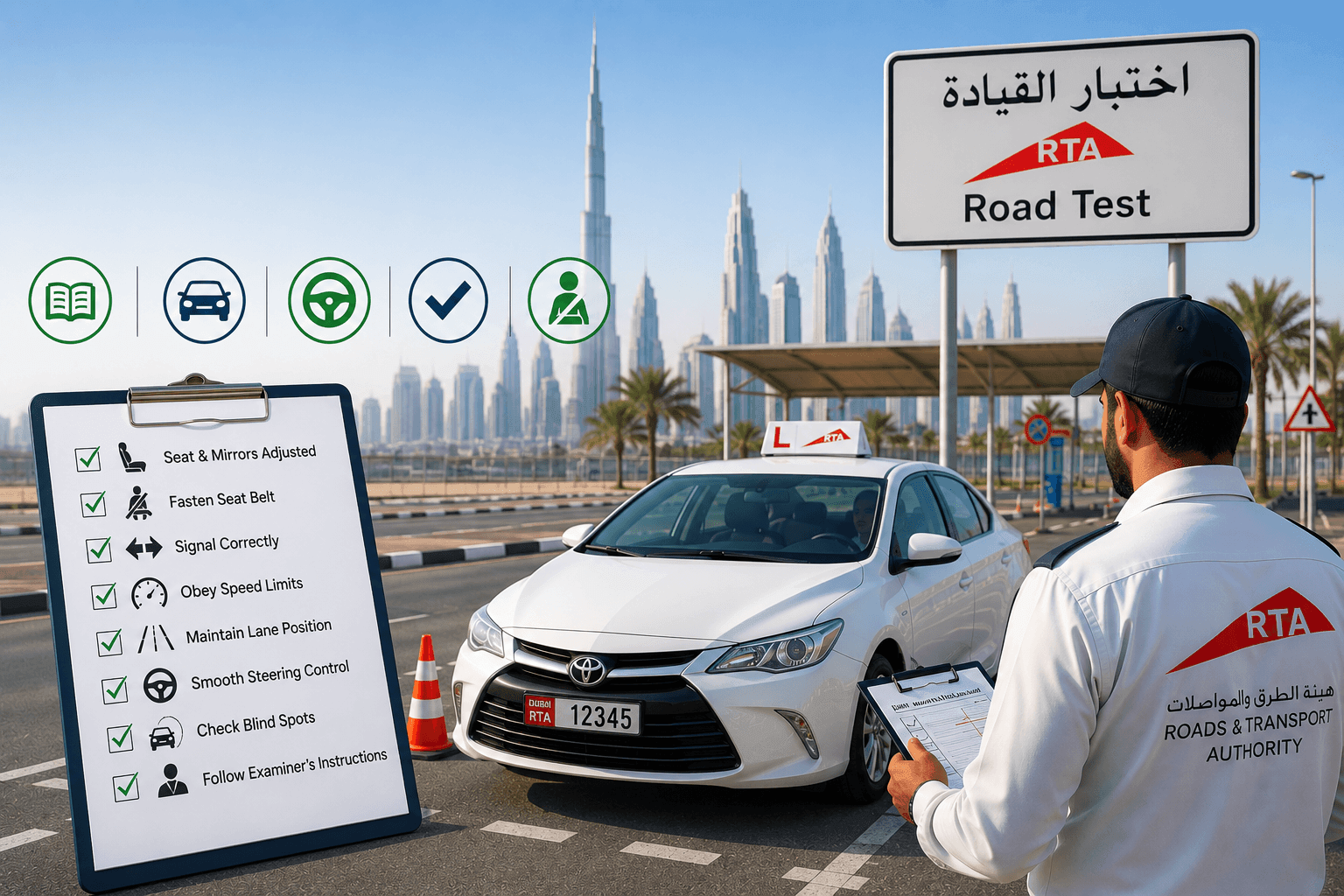
How To Pass RTA Road Test
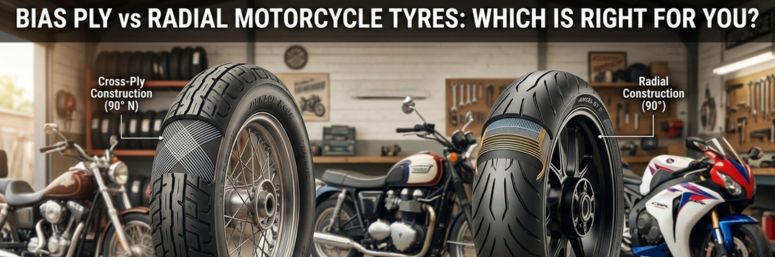
Bias ply tyres prioritize durability, comfort, and load stability. Radial tyres focus on performance, heat control, and precision handling. Neither is “better”—they’re engineered for different purposes.
Choose the tyre that complements your motorcycle’s design and your riding reality.
Motorcycle tyres aren’t just round pieces of rubber that keep you rolling. They’re the only point of contact between your bike and the road—your contact patch—and that makes them a serious safety component, not just an accessory.
Yet many riders choose tyres based on brand or price without understanding what’s happening inside the tyre carcass. If you’ve ever wondered whether tyre construction really affects handling, braking, or comfort, you’re asking the right questions.
Tyre construction influences everything from motorcycle dynamics to braking confidence. The internal structure determines how the tyre reacts to centrifugal force, how it manages rolling resistance, and how efficiently it transfers torque to the road.
In simple terms: tyres don’t just roll—they work.
Motorcycle tyres are engineered systems made from:
These elements together define the tyre’s load index, speed rating, and overall performance envelope.
Tyre construction directly affects:
That’s why OEMs specify exact tyre types during OEM fitment.
Bias ply tyres (also called cross-ply tyres) feature overlapping layers arranged diagonally across the tyre carcass.
This design prioritizes durability over outright speed.
Bias ply tyres typically offer:
Radial tyres feature plies running perpendicular to the direction of travel, reinforced by steel or aramid fiber belts beneath the tread.
Radial tyres excel in:
| Factor | Bias Ply | Radial |
|---|---|---|
| Contact patch | Smaller, stable | Wider, adaptive |
| Heat management | Moderate | Excellent |
| Rolling resistance | Higher | Lower |
| Load index | Higher | Moderate |
| Speed rating | Lower | Higher |
Bias ply tyres handle potholes and uneven roads better due to controlled sidewall flex.
Radials manage sustained speed better by reducing heat through efficient rolling resistance.
Radial tyres dominate thanks to better camber thrust, lean stability, and grip consistency.
Most manufacturers prohibit mixing because mismatched tyres disrupt motorcycle dynamics, compromise braking stability, and interfere with chassis geometry.
Always verify:
Tyres must match your bike’s engineering—not just your budget.
Yes. Speed ratings define how safely a tyre handles heat and centrifugal force at high speeds.
A larger, stable contact patch improves braking efficiency and grip.
Radials improve camber thrust, reduce unsprung weight, and enhance cornering stability.
Yes. Repeated heat cycles harden rubber, reducing grip.
Often yes, due to higher load index and stronger carcass construction.