May 6, 2026
How To Pass RTA Road Test
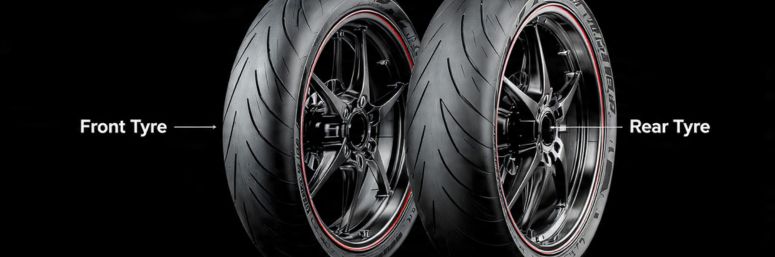
At first glance, motorcycle tyres look identical. Round. Black. Rubber. Spinning at ridiculous speeds.
So it’s easy to think, “A tyre is a tyre.”
But here’s the truth: front and rear motorcycle-tyre are as different as your eyes and your legs. Both are critical. Both do different jobs. And confusing them can quietly ruin handling — or loudly ruin your day.
This guide breaks down front vs rear motorcycle tyres in a way riders actually understand. No engineering fluff. No sales jargon. Just real-world riding logic you’ll feel every time you lean, brake, or twist the throttle.
Motorcycles rely on two tyres only, unlike cars that distribute workload across four. Each tyre is engineered for a specific role, and those roles are never interchangeable.
Understanding motorcycle tyre types is the foundation of confident, safe riding.
motorcycle steer, brake, and accelerate differently than cars — which is why tyre specialization matters.
Each tyre experiences completely different forces — vertical, lateral, and rotational.
These patches control:
Understanding how each tyre manages its patch explains nearly everything about handling.
The front tyre is your decision-maker. It controls:
If the front tyre loses grip, recovery is unlikely. That’s why feedback matters more than outright grip.
Front tyres feature:
They interact directly with steering head angle and trail measurement, affecting stability at speed.
Front tyres operate at smaller slip angles, prioritizing feel over brute traction.
A good front tyre tells you:
That communication builds rider confidence.
The rear tyre converts combustion into motion.
It manages:
Rear tyres are:
They endure far more abuse — which is why they wear faster.
Repeated acceleration creates heat cycles, breaking down rubber compounds over time.
This directly impacts:
Front tyres clear water first, maintaining steering control.
Rear tyres follow, focusing on drive traction.
Incorrect mounting ignores tyre manufacturing direction and reduces safety.
Rear tyres often use multi-compound technology:
Front tyres prioritize consistency, predictability, and feedback.
Modern bikes mostly use radial tyres, offering:
Some cruisers still use bias-ply tyres, affecting how front and rear tyres behave differently.
Front tyres typically run lower pressure to:
Rear tyres need higher pressure to:
Incorrect pressure destroys handling faster than worn tread.
Often linked to braking habits or suspension setup.
Throttle discipline matters.
No. Ever.
They differ in:
Swapping compromises safety and often violates OEM tyre specifications.
Balanced Street vs sport tyres with longevity.
High-grip matched sets with fast warm-up.
Focus on mileage, stability, and wet grip performance.
Purpose-built tyres designed for mixed terrain.
Always respect:
Ignoring them affects insurance, legality, and safety.
Modern bikes rely on tyres for:
Poor tyre choice confuses electronics.
Check weekly:
Rear tyres will almost always need replacement first.
Front and rear motorcycle tyres aren’t cosmetic choices — they’re precision tools.
Respect their differences, choose wisely, maintain them properly, and your motorcycle will reward you with:
Yes — if designed as a matched set.
Heat cycles and power delivery.
Yes, if compatible.
Profile deformation affects steering.
Ideally, especially for performance riding.